







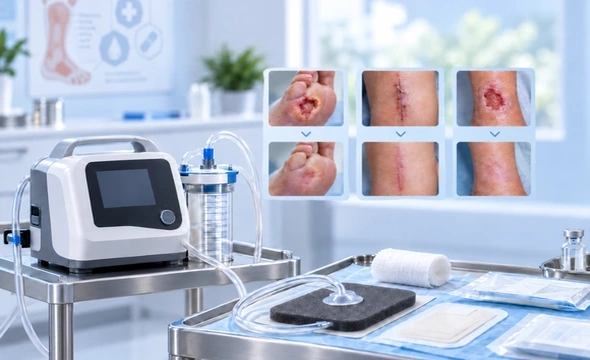
Advanced Wound Managements
Complex, chronic and difficult-to-heal wounds require carefully selected solutions that support effective wound-bed management, tissue recovery and consistent clinical care. Choosing the right product requires consideration of wound type, treatment objectives, patient condition, clinical protocol, product compatibility, regulatory suitability, training, availability and overall cost of care.
We help hospitals, wound-care centres, clinics, distributors and institutions identify suitable advanced wound-management solutions from reputable international manufacturers. We compare available options against each client's clinical, technical and commercial priorities and can also explore specialised wound-care products beyond our current portfolio.
Specifications and Portfolio Scope
Our current portfolio scope includes Negative Pressure Machines and Amniotic Membrane Allografts, together with compatible accessories and supporting products where applicable. Solutions can be evaluated according to wound indication, treatment setting, therapy requirements, product configuration, ease of use, supply continuity, storage conditions and budget.

Specifications and Portfolio Scope
Negative Pressure Machines
Negative Pressure Machines
Negative pressure wound therapy systems apply controlled suction to a sealed wound dressing to support fluid and exudate management and help create a protected environment for healing. Configurations may be selected for hospitals, specialist wound-care units, outpatient facilities or home-care programmes, subject to clinical assessment and the manufacturer's approved indications.
Controlled Therapy - Adjustable pressure settings and continuous or intermittent therapy modes allow clinicians to match treatment delivery to the wound-management protocol and patient needs.
Exudate Management - Compatible dressings, tubing and collection canisters help remove wound fluid while maintaining a closed therapy environment. Canister capacity and dressing options can be matched to expected exudate levels and wound characteristics.
Safety and Usability - Selected systems may include leak detection, blockage alerts, canister-full alarms, battery-status indicators, simple controls and portable designs to support reliable operation and patient mobility.
Flexible Configuration - Device size, pressure range, battery duration, dressing materials, canister options and accessory availability can be compared according to the intended clinical setting and procurement requirements.
Amniotic Membrane Allografts
Amniotic membrane allografts are biologic wound-covering products derived from donated placental tissue and processed under controlled quality systems. Depending on the product's approved use and the clinician's assessment, they may support the management of selected complex, chronic or non-healing wounds.
Product Formats - Options may include dehydrated, cryopreserved or other manufacturer-specific formats in different sizes and presentations. Selection depends on the clinical indication, handling method and treatment protocol.
Quality and Traceability - Products should be supported by donor-screening controls, tissue-processing documentation, sterility assurance, traceability records and clearly defined storage, handling and shelf-life requirements.
Clinical and Operational Fit - We compare application requirements, available sizes, preparation steps, storage conditions, packaging, supporting evidence and supply continuity so clients can identify a suitable product for their setting.
Amniotic Membrane Allografts
Finding the Right Solution
Finding the Right Solution
We begin by understanding the wound-care application, clinical setting, required specifications, expected utilisation, preferred product format, storage capacity, staff-training needs and budget. We then identify suitable manufacturers, compare alternatives and help clients balance clinical suitability, quality, usability, availability and commercial practicality.
Your Advanced Wound Management Partner
Depending on the product and project, IHIT Kenya can coordinate supplier communication, technical documentation, regulatory requirements, commercial arrangements, shipping, local delivery, product orientation, warranty and after-sales support. We can also help plan the supply of compatible consumables and accessories, providing clients with one point of coordination from enquiry through ongoing product support.
Your Advanced Wound Management Partner
Frequently asked questions
Yes. We compare available options according to the wound-care application, clinical setting, required specifications, product format, consumables, storage needs and budget.
Configurations vary by manufacturer. We can source compatible dressings, tubing, canisters and other accessories and confirm what is included in each quotation.
The format, packaging, storage temperature, shelf life and preparation requirements depend on the selected product. These details are confirmed before supply.
Where applicable, we coordinate product orientation, technical information, regulatory documentation and manufacturer-supported training.
Yes. We can explore additional advanced wound-care technologies and consumables through our international manufacturing network.
What do they say about iHiT ?

Lovely and a beautiful, calm environment.
Sep 21, 2023Did a successful event at IHIT ground, the services from the whole team was excellent. My sincere gratitude goes to Elshiba,Mehran and Fidel. Fidel was organized, polite and very respectful. He talked to our guests well and ensured everything ran smoothly. Much appreciated IHIT team
Jan 18, 2024Perfect place for both indoor and outdoor activities. Loved it!
Sep 21, 2023I held my open day event at iHIT and the service was great. Had a successful event and would recommend the space to anyone looking for a quite venue for your meetings. Customer service is excellent.
Mar 19, 2023They were very accomodative even when I requested for last minute arrangements that were outside of what was earlier planned.
Feb 16, 2023Did a graduation party here. An amazing place, amazing host and very affordable. Value for money
Mar 18, 2022good space for events and has well knowledged staff
Mar 11, 2022Very beautiful facilities. They have maintained the garden very well giving the outdoors a serene feel...
Feb 24, 2022